

Robot Vacuum Maintenance 2026: Complete Guide
Robot vacuum maintenance 2026: 3 mistakes that kill your machine. Sensors, brushes, filters — complete guide to extend life.
This site contains Amazon affiliate links. We may earn a commission on qualifying purchases, at no extra cost to you.
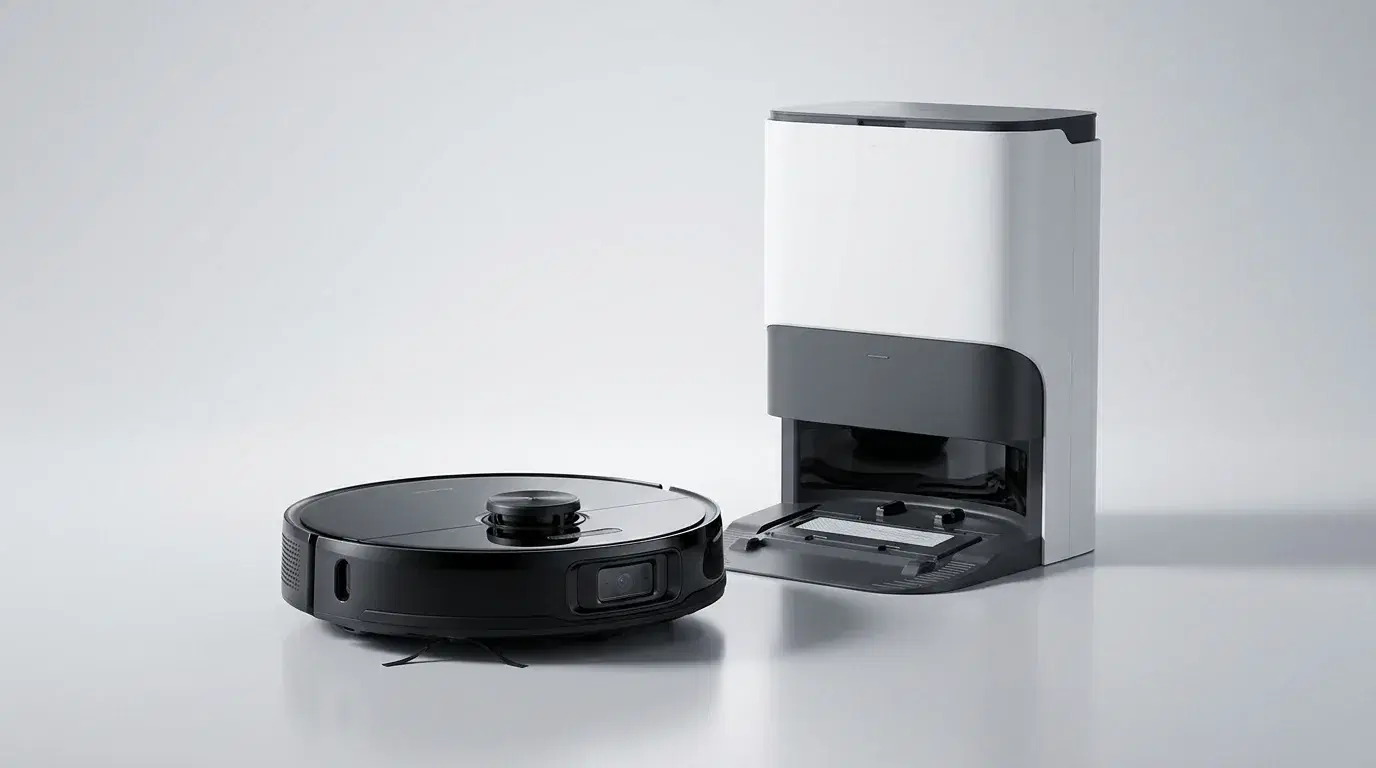
Roborock
Roborock S8 MaxV Ultra
- Auto-empty station + mop washing
- Precise LiDAR navigation
- Vacuums and mops simultaneously
What budget to plan?
Basic annual cost
$25–45Replacement filters and brushes for standard maintenance.
Full annual cost
$70–100With auto-empty station: bags, filters, side brushes, cleaning solution.
Criteria to evaluate
Cleaning frequency
essentialA poorly maintained robot loses 50% of its efficiency in 3 months.
Replacement accessories
importantBrushes, filters, bags. Check their availability and price before buying.
Station and reservoirs
importantStation self-cleaning and reservoir rinsing are crucial.
Sensors and wheels
secondaryDirty sensors make the robot bump and reduce navigation precision.
Robot Vacuum: Complete Maintenance Guide 2026
A robot vacuum is an investment. At $430, $680 or $1,020, you expect it to last several years. Yet many owners see their robot's performance drop drastically after a few months — not because of a manufacturing defect, but because of neglected maintenance.
This guide details the complete maintenance of a robot vacuum in 2026. Brushes, filters, sensors, station: every component needs regular attention to maintain day-one performance.
Why Maintenance is Crucial
A poorly maintained robot undergoes progressive degradation:
- Tangled brushes → 30 to 50% suction loss
- Saturated filter → motor overheating and dust release
- Dirty sensors → erratic navigation, collisions, missed zones
- Blocked wheels → noisy movement, premature wear
- Dirty station → odours, bacteria spread
A well-maintained robot can last 5 to 7 years. A neglected one declines in 18 months.
Weekly Checklist (5 minutes)
1. Remove hair from the main brush
The main brush is the most stressed component. Use the provided cleaning tool (small integrated blade) to cut wrapped hairs, then pull them out gently.
Tip: spin the brush by hand to check it turns freely. If it resists, there are still hairs caught in the bearings.
2. Clean the side brushes
The side brushes (often 3-arm shaped) attract dirt towards the main brush. They also tangle with hair and threads. Remove them, clear debris, and reattach them.
3. Empty the dust bin
Even if the bin isn't full, empty it. Fine compacted dust reduces airflow and makes the motor overheat.
4. Wipe the fall and contact sensors
The infra-red sensors under the robot (anti-fall) and on the sides (obstacle detection) must be clean. A simple fingertip of dust makes them ineffective.
Monthly Checklist (15 minutes)
5. Wash or replace the filter
The robot's HEPA filter saturates quickly. Depending on the model:
- Washable filter: rinse under lukewarm water, dry for 24h before reinserting
- Disposable filter: replace every 2–3 months
6. Clean the wheels
Remove hair and fur wrapped around the drive wheels and front caster wheel. Use pliers if necessary.
7. Check the main brush bearings
If you hear a rubbing or squeaking noise, the bearings may be worn or obstructed. Clean them with a cotton bud.
8. Update the software
Updates fix navigation bugs and improve cleaning efficiency. Check the app once a month.
Quarterly Checklist (30 minutes)
9. Deep clean the station (if auto-emptying)
- Empty and replace the dust bag
- Wipe the inside of the station bin with a damp cloth
- Check that the emptying duct is not obstructed
10. Rinse the water reservoirs (if washing station)
Stagnant water in clean or dirty reservoirs creates odours and bacteria. Rinse them with a little diluted white vinegar.
11. Clean the mops (if mop robot)
Fabric mops are machine washable (delicate cycle). Rubber mops rinse under hot water.
12. Inspect brushes and wheels for wear
Brushes wear out after 6–12 months depending on use. Wheels show wear on the rubber. Replace if necessary.
Annual Maintenance Cost
| Component | Frequency | Unit cost | Annual cost |
|---|---|---|---|
| HEPA filters | Every 2–3 months | $8–13 | $32–52 |
| Side brushes | Every 6 months | $7–10 | $14–20 |
| Main brush | Every 12 months | $17–30 | $17–30 |
| Station bag (if applicable) | Every 2 months | $4–7 | $24–42 |
| Mops (if mop) | Every 3 months | $13–21 | $52–84 |
Estimated annual total: $70–155 depending on the model and use.
Common Problems and Solutions
| Problem | Likely cause | Solution |
|---|---|---|
| Robot spins in circles | Dirty sensors | Clean the infra-red sensors |
| Weak suction | Saturated filter or tangled brush | Replace filter, clean brush |
| Abnormal noise | Blocked wheels or bearings | Remove hair from wheels |
| Doesn't return to base | Dirty charge sensor | Wipe the charge contacts |
| Station smells bad | Dirty water reservoir | Rinse reservoirs and mops |
Conclusion
A robot vacuum is a cleaning partner, not a maintenance-free device. 5 minutes per week is enough to maintain its performance over the long term. Neglect this maintenance, and you'll have an erratic, noisy and inefficient robot in less than a year.
Our advice: set a weekly reminder on your phone. The time invested in maintenance is largely compensated by the extra years of service.
To choose the right robot from the start, check out our main guide "Which vacuum to choose" and our comparison of the best robots 2026.
📧 Ne manquez aucun bon plan
Inscrivez-vous pour recevoir nos conseils d'expert et alertes promos directement dans votre boîte mail.
🔒 Rejoignez 5 000+ lecteurs — En vous inscrivant, vous acceptez notre politique de confidentialité.
Ready to choose your vacuum?
Browse our comparisons to find the ideal vacuum for your budget and needs.
Find the best vacuum →Frequently asked questions
Also read